A concrete mixer is usually the first machine a contractor buys — and the one that works the hardest. Choosing correctly saves fuel, labour and a lot of rework. Here is the checklist we walk our customers through in Jaipur.
1. Match capacity to your daily pour
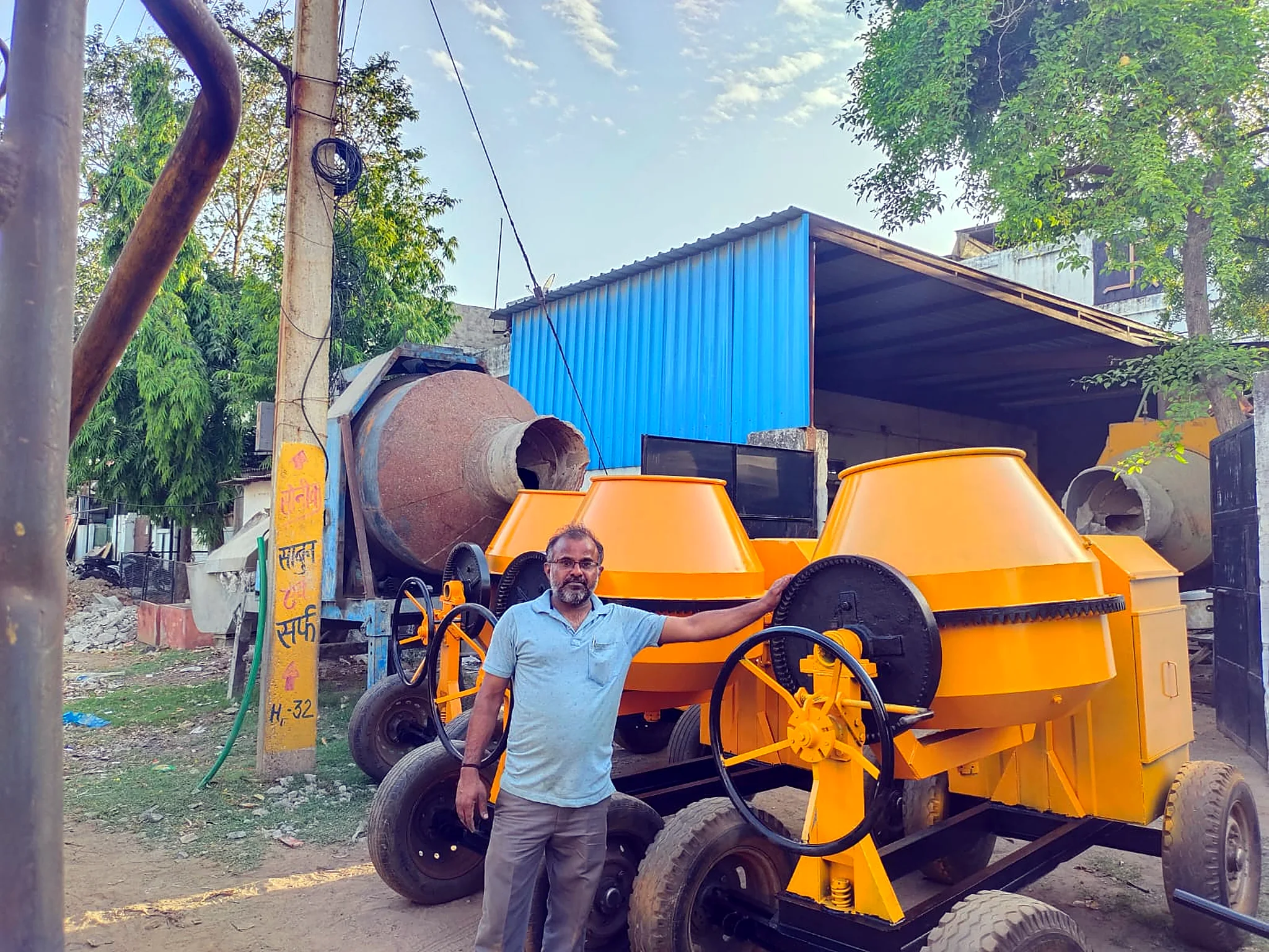
A 1-bag (10/7 CFT) mixer is the standard for slabs, columns and beams on most residential and commercial sites. For small repairs and individual houses, a half-bag RCC mixer or mini mixer is lighter and more economical.
2. Hopper or manual charging?
A hopper mixer loads materials in one tip, so batches are faster and more consistent. If your crew is small, a hopper often pays for itself within a few months through saved man-hours.
3. Do you need lifting?
On multi-storey work, a mixer with lift raises concrete straight to the slab — no separate hoist and no chain of labourers on the scaffolding.
Rule of thumb: if you cast more than two slabs a month above ground floor, a lift mixer is worth it.
4. Diesel or electric
- Diesel — independent of site power, best for new plots and remote locations.
- Electric — quieter and cheaper to run where reliable 3-phase supply is available.
5. Check the build
Look at drum plate thickness, ring-gear quality, chassis channel size and tyre quality. These decide how many years the machine keeps working.
Not sure which model suits you? Talk to us — we’ll recommend a mixer based on your project, not our stock.